What Are Document Imaging Services and How They Help Businesses Manage Information
Every organization manages documents. Contracts, invoices, forms, reports, and incoming mail all create paperwork that must be stored and accessed.
Paper files create problems as businesses grow. Documents get misplaced. Storage costs increase. Teams spend valuable time searching for information.
Many organizations solve this problem by using document imaging services.
Document imaging services convert paper records into organized digital files. Instead of relying on cabinets or boxes, businesses can search and retrieve documents instantly.
This change makes information easier to access and easier to manage.
What Document Imaging Services Actually Do
Document imaging services do more than simply scan documents.
A typical process begins with preparing files for scanning. Staples and clips are removed so documents move through a high-speed document scanner without interruption.
Next, scanners capture digital images of each page. The images are then enhanced using software that improves readability and removes background noise.
After scanning, the files are indexed so they can be searched by document type, customer name, or date. This indexing step is what transforms scanned pages into usable digital records.
Once complete, businesses can access their documents through secure digital systems rather than paper storage.
Why Businesses Use Document Imaging
Organizations adopt document imaging services for several reasons.
Faster document retrieval
Teams no longer spend time searching through file cabinets. Digital files can be located in seconds using search tools.
Reduced storage costs
Off-site storage and physical archives become unnecessary when records are digitized.
Improved document security
Digital systems allow companies to control access, track document activity, and protect sensitive information.
Better collaboration
When companies scan documents and store them digitally, teams across locations can access the same information instantly.
These benefits make document imaging an important step in modernizing business operations.
Bulk Document Scanning for Large Archives
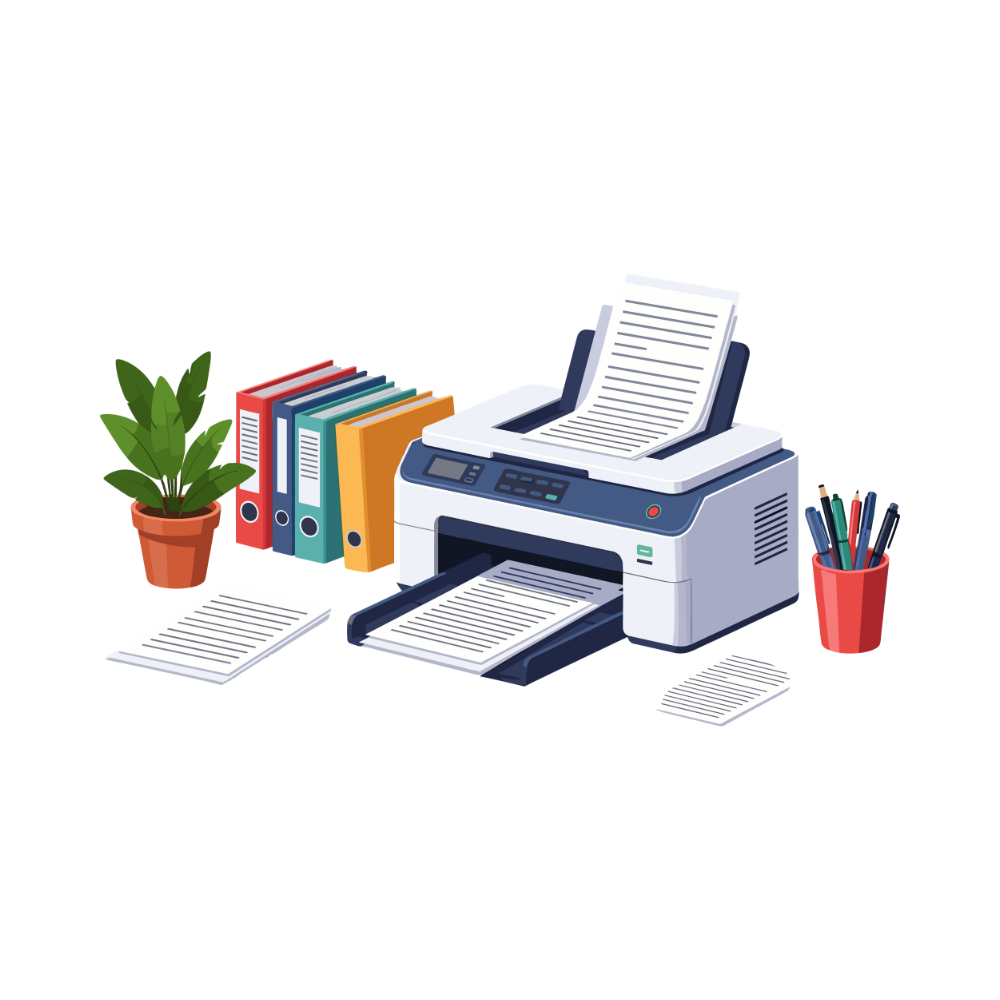
Many companies have years of records stored in boxes or file rooms.
Digitizing these archives often requires bulk document scanning.
Bulk document scanning uses high-speed equipment to process thousands of pages quickly. This approach allows businesses to convert large paper archives into searchable digital records without interrupting daily operations.
Organizations commonly use bulk scanning when they:
• digitize historical records
• convert file rooms into digital archives
• prepare for document automation projects
• modernize records management practices
Once these records are digitized, information becomes significantly easier to locate and manage.
Document Imaging as the First Step Toward Automation
Digitizing documents is often the first stage of a larger workflow transformation.
Once documents exist in digital form, organizations can automate tasks such as routing documents, extracting information, and integrating data into business systems.
This is why many companies begin with document imaging services before moving toward automated document processing systems.
By turning paper into structured digital information, businesses create the foundation needed for more efficient workflows.
The Long Term Value of Digitized Documents
Organizations that digitize records gain long-term advantages.
Digital documents are easier to store, easier to search, and easier to protect. Teams spend less time managing paper and more time working with information.
As companies continue to modernize operations, document imaging services remain one of the most effective ways to reduce paper dependency and improve efficiency.
For businesses still managing large volumes of paperwork, digitizing documents can quickly transform how information moves across the organization.