Understanding “Proof of Mailing”: USPS Services That Actually Provide It
When you send important documents, you often need proof that you mailed them on time or that the recipient received them. Courts, government agencies, lenders, and other organizations may even issue fines or reject filings if you cannot show proper proof of mailing or proof of delivery. That is why understanding “proof of mailing” and the USPS products that support it is so important.
There is no single USPS service literally called “Proof of Mailing.” Instead, the Postal Service offers several options that can serve as evidence that you mailed something or that it was delivered. The right choice depends on what the requesting party requires and how much you are willing to spend.
What “proof of mailing” really means
Proof of mailing usually means you can show that you handed a specific mailpiece to the USPS on a certain date. Some services add proof of delivery, which shows that the item reached the address or that a delivery attempt was made.
Before you choose a service, ask the court, agency, or company what they accept. Some only need proof that you mailed something. Others require proof that the recipient signed for it.
If you want a deeper technical explanation of Certificate of Mailing, you can review this USPS overview:
https://faq.usps.com/s/article/Certificate-of-Mailing-The-Basics faq.usps.com+1
USPS options that provide proof of mailing
USPS retail receipt
When you mail a package at a USPS retail counter, you receive a printed receipt. It shows the date, the amount you paid, and a tracking number. This can support proof that you mailed something, but it does not list the full address, only the destination ZIP in most cases. That is why some organizations do not treat the retail receipt as strong proof of mailing.
Certificate of Mailing
Certificate of Mailing is the primary USPS service designed to provide proof of mailing. You fill out a USPS form that lists the recipient name and address. The clerk accepts your mail, collects the fee, and stamps the form with the date. That stamped form is your official record that USPS received the item. faq.usps.com+1
Key points:
- Shows that you mailed a piece to a specific address on a specific date
- Does not provide tracking or proof of delivery
- You must keep the form yourself as your record
You can see the current USPS information on Certificate of Mailing here:
https://postalpro.usps.com/com postalpro.usps.com
Bulk Certificate of Mailing
If you mail many pieces at once and only need proof that you submitted the batch, Bulk Certificate of Mailing can be more economical. You complete a USPS form that lists the number of pieces, the mailing date, and other details. USPS validates that they received that number of pieces and returns the form as your record. Print Bind Ship
This option proves that you mailed a group of items, not each individual address. You are responsible for keeping your own list of what you included in that batch.
USPS options that provide proof of delivery
Sometimes you need more than proof of mailing. You may need proof that the item arrived or that a delivery attempt was made. In those cases, you look at services that provide proof of delivery.
Certified Mail
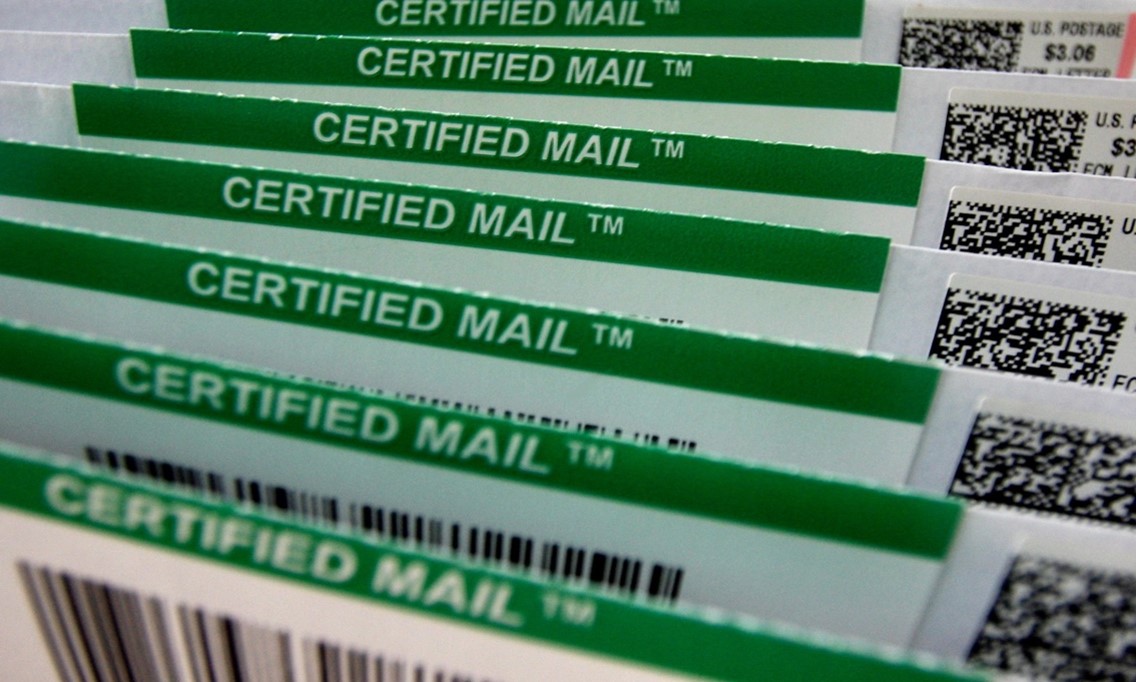
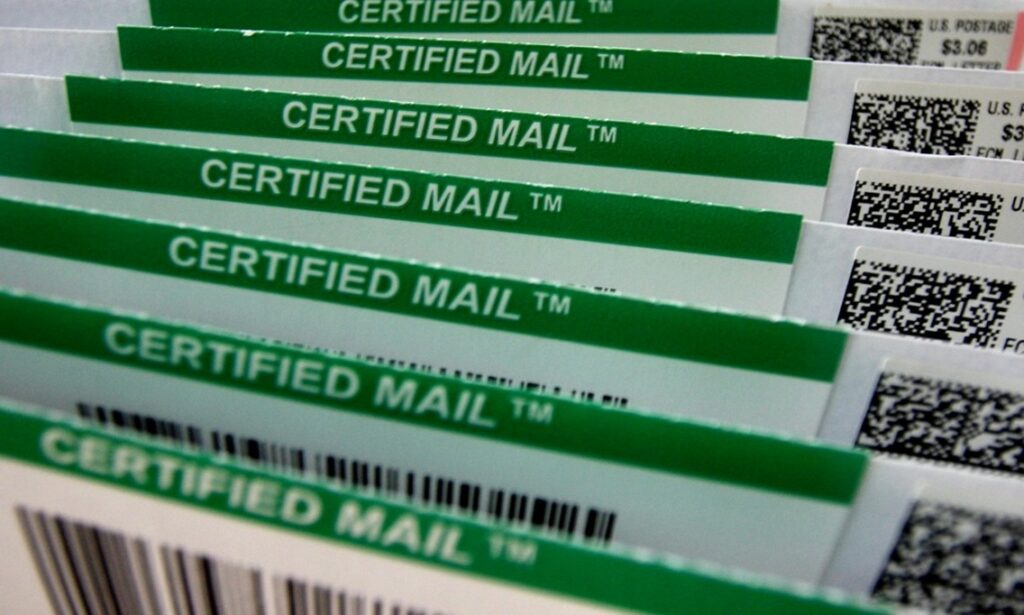
Certified Mail is an extra service you add to First Class or Priority Mail. It gives you:
- A mailing receipt with a unique tracking number
- Electronic confirmation that USPS delivered the item or attempted delivery
Certified Mail is often accepted when you must prove both mailing and delivery status. It does not automatically include a copy of the recipient’s signature, but you can add Return Receipt if you need that. c360faq.usps.com+2FSSI+2
For more detail, you can review the USPS Certified Mail basics here:
https://c360faq.usps.com/s/article/Certified-Mail-The-Basics c360faq.usps.com
Certified Mail with Return Receipt
Return Receipt is an optional service that you add to Certified Mail. With it, you receive proof of who signed for the item and when. This can arrive as a physical “green card” or as an electronic PDF sent by email. certifiedmaillabels.com+1
Many legal and financial entities require Certified Mail with Return Receipt when they need a documented signature and delivery date.
Registered Mail
Registered Mail is the most secure USPS service for very valuable or sensitive items. It:
- Requires a signature at delivery
- Uses a strict chain of custody and locked containers
- Can include higher levels of insurance
Because of the extra handling and security, Registered Mail can move more slowly than regular First Class or Priority Mail. It is usually used for irreplaceable or very high value contents. Wikipedia+3faq.usps.com+3Postal Explorer+3
You can read more about Registered Mail on this USPS page:
https://faq.usps.com/s/article/Registered-Mail-The-Basics faq.usps.com
How to choose the right option
To choose the right service, work backward from the requirement:
- Ask what is required. Does the organization need proof of mailing, proof of delivery, or both.
- Match the USPS product.
- Proof of mailing only: Certificate of Mailing or Bulk Certificate of Mailing
- Proof of mailing plus delivery status: Certified Mail
- Proof of mailing plus signature: Certified Mail with Return Receipt or Registered Mail
- Consider volume and cost. For occasional items, paying more for Certified or Registered may be fine. For high volume mailings, Bulk Certificate of Mailing plus good internal records may be more cost effective.
For a neutral comparison of Certificate of Mailing and other options, you can also review this article:
https://www.postgrid.com/certificate-or-proof-of-mailing-vs-certified-mail/ PostGrid
Where OMG and USPS fit into your mailing strategy
Onsite Management Group helps organizations design mail workflows that satisfy legal and regulatory requirements without adding unnecessary cost. We work closely with USPS and other partners to match the right service level with each type of mail.
You can learn more about our USPS alliance and mailing expertise here:
https://omgservices.com/usps/
For broader help with mail operations and mailroom strategy, explore our mail services overview:
https://omgservices.com/services/mail/
Understanding “proof of mailing” before you send something is always cheaper and safer than trying to fix a problem after a deadline passes.
Click here for more information about Certificate of Mailing